Why I Write for Young Adults
When I grew up, my parents, older brother, and I moved several times before I went away to college, but always within Queens—which, though part of New York City, didn’t feel like a city, or a suburb, or a small town, or the countryside. This place that felt like no place became the fictional “Belle Heights,” a place I keep coming back to.
When I was seven, I sat on the edge of an old, enormous tree stump outside our first apartment. Sadly, a magnificent tree had been cut down because an old lady thought the tree would fall on her building. She had a cocker spaniel whose ears were always taped up over his head for unspecified medical reasons—the dog’s name was “Impy,” short for “Impossible.”
On that tree stump, I had an odd experience. Suddenly, the whole world looked entirely, overwhelmingly, different, and I saw my life split into two distinct parts. Early childhood, on one side of this moment, was over now, and the rest of childhood was on the other.
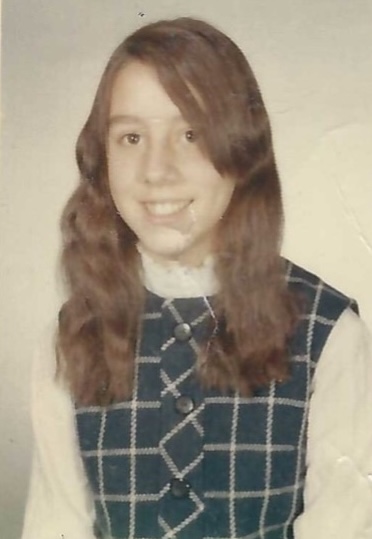
This same thing happened again seven years later, at age 14. I can’t remember where I was, but not on the tree stump. Again, it took only an instant. This time, all of childhood was on one side of the moment, and early adulthood loomed on the other.
This is when I started writing fiction. This is also why many of my characters experience life-altering changes at lightning speeds. I don’t question if it’s realistic. I know it is because it happened to me.
So, I figured I had a pattern; this transformation, or whatever it was, which had occurred at seven and 14, would happen every seven years—at 21, 28, 35, and so on. But it never happened again. There have been quite a few seven-year milestones since then, but at 14, something stuck and stayed in place.
Which is why I’m a young-adult writer. Because that 14-year-old self has never really gone away.